The Greek & Roman World
From the Venus de Milo to the Winged Victory, the masterpieces that defined Western art, with a quieter passage through the enigmatic Etruscans who shaped Rome before Rome existed.
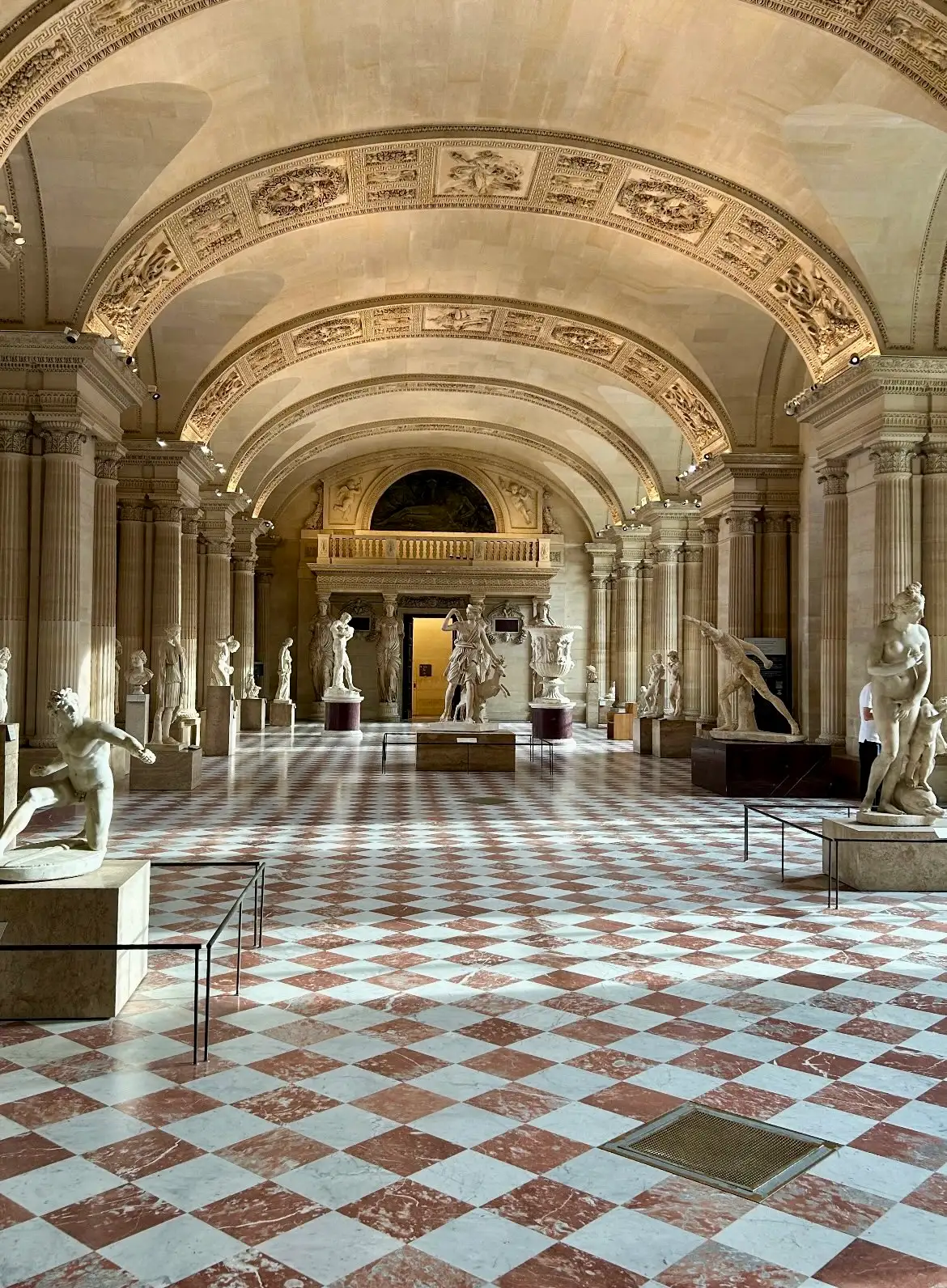
The Louvre's department of Greek, Etruscan and Roman antiquities holds one of the finest collections of ancient art anywhere in the world. This tour follows its central thread, from the temples of archaic Greece to the marble of imperial Rome, with a quieter passage through the Etruscans, the people who shaped Italy before Rome had a name.
These are the works that defined Western art for two thousand years. We look at how the Greeks reinvented the human figure and gave it weight, breath and movement, and how Rome carried that achievement across an empire and handed it down to us.
What you will see
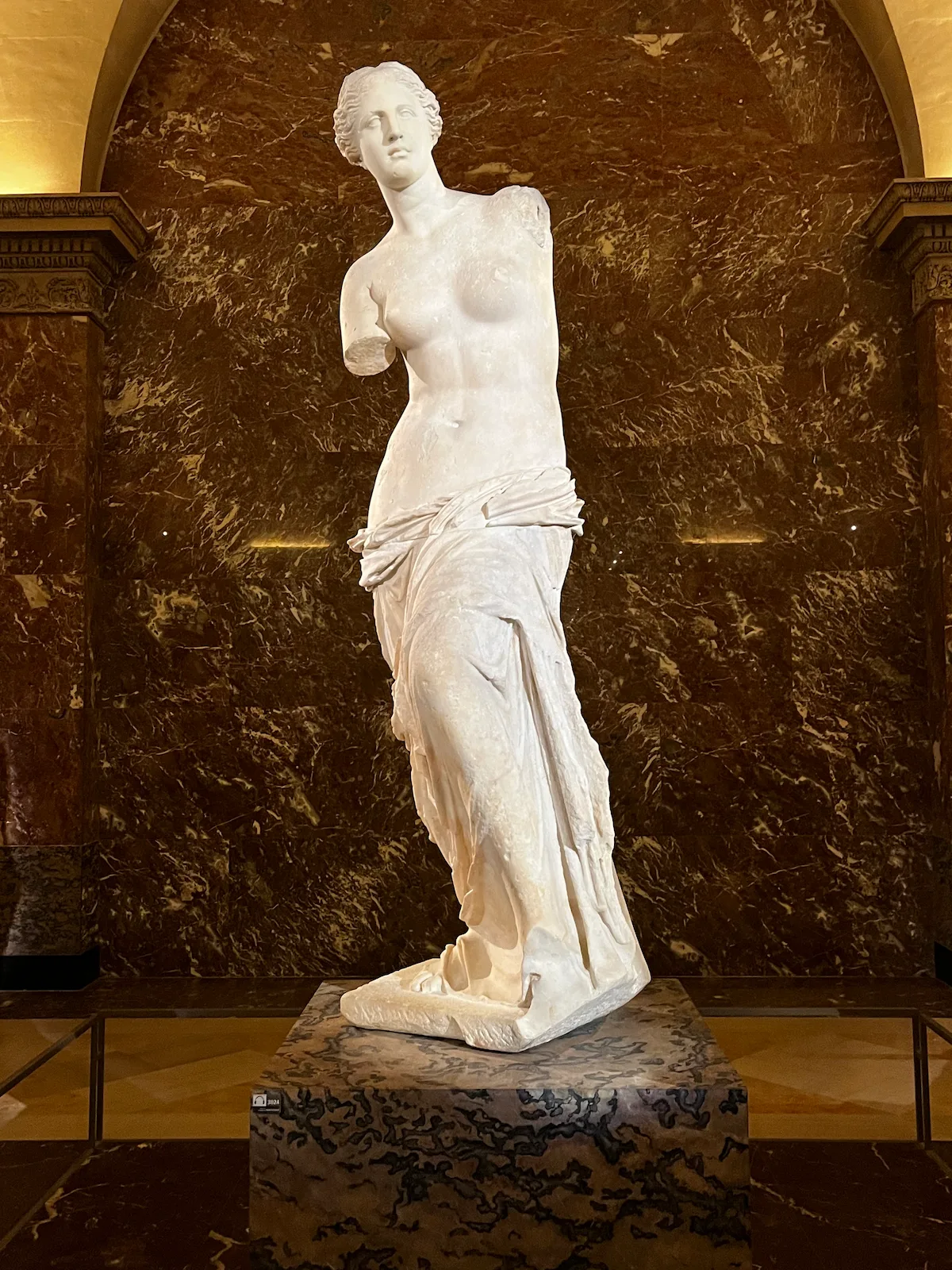
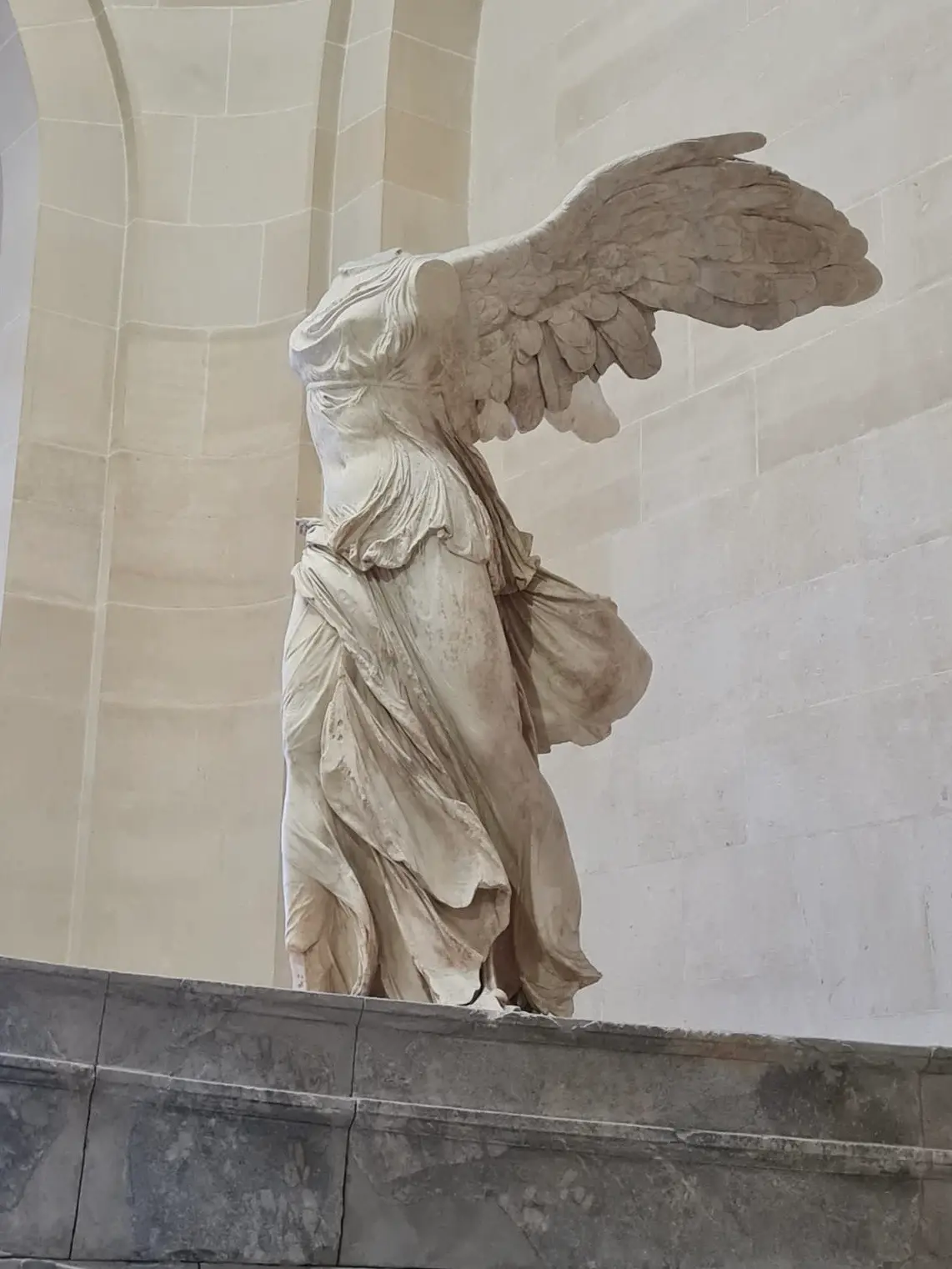
We meet the great names, the Venus de Milo and the Winged Victory of Samothrace among them, and set them within the long story of how Greek and Roman sculpture learned to come alive. As much as the works themselves, the tour is about the civilisations behind them, how they saw the body, the gods and the world, and how that vision still shapes ours.
Along the way we slow down in the Etruscan rooms, among the quietest in the museum. The Etruscans shaped Italy for centuries before Rome, yet left almost no voice of their own. What survives is art of startling directness, and faces that reach across two and a half thousand years.
It suits anyone drawn to the classical world, whether you are seeing it for the first time or returning with a sharper eye. If a particular period draws you, or if the Etruscans are the reason you are coming, mention it when you enquire and we will give it the heart of the visit.
Archaic Greece · the classical age · imperial Rome
Pépin's advice
Look for the movement. Greek sculpture is a body caught mid-gesture. Once you start seeing the shift of weight and the turn of the head, the whole gallery comes alive.
Mind the copies. Much of what survives of Greek art reaches us through Roman hands. Knowing which is which changes how you read a room, and we will point the way.
The white is an accident. None of this marble was meant to be white. Skin, hair, eyes and drapery were all painted, often in strong colours, and it is time rather than taste that stripped them bare. Later ages mistook what was left for the ideal.
Good to know
The Louvre does not open every gallery every day. The museum is closed on Tuesdays, which is the only day this tour cannot run. Any other day works well. Very occasionally a room opens late, or not at all, for operational reasons the museum does not announce in advance. If that happens it is beyond anyone's control, and we simply turn to another part of the collection so your time is never lost. With more than thirty-five thousand works on display, the Louvre is never short of something remarkable, and a private guide can reshape the visit on the spot in a way a fixed group tour never could.