Nearly every French monarch from Dagobert I to Louis XVIII is buried in Saint-Denis. The list runs for twelve centuries, the Merovingians, the Carolingians, the Capetians, the Valois and the Bourbons. The basilica was also, in 1144, the first building in the world to use the full vocabulary of Gothic architecture, pointed arches, ribbed vaults, flying buttresses, and stained glass flooding the interior with coloured light. The style spread across Europe within a generation.
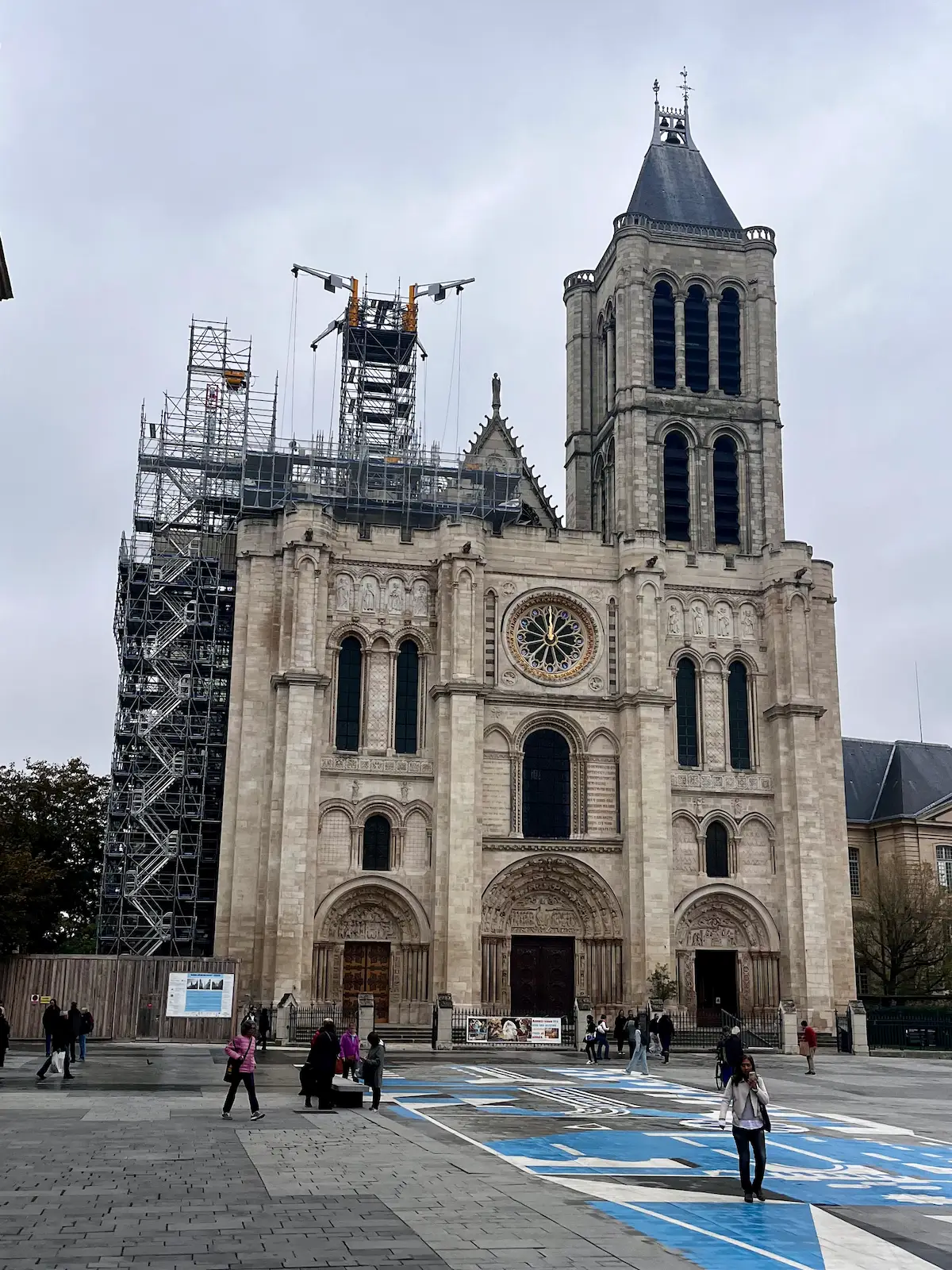
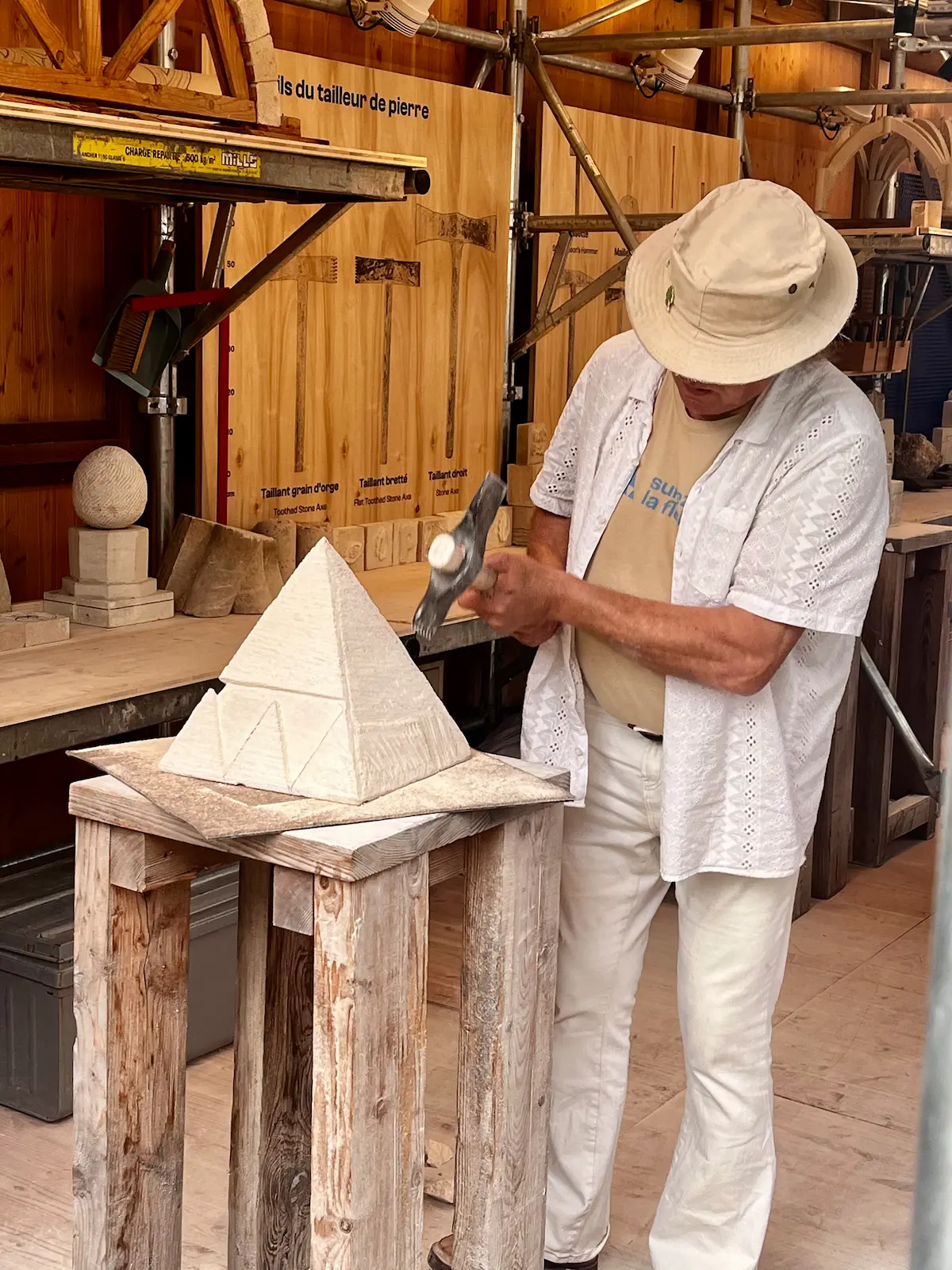
It is also a building site again. The north spire, dismantled in the 1840s after storm damage left the tower unsafe, is being rebuilt stone by stone with medieval methods, and the workshop sits in the square in front of the facade, where you can watch the stonemasons cut the blocks that will go up the tower. Restoration work continues inside as well, so the basilica is very much a monument in progress rather than a finished object.
The basilica is thirty minutes from central Paris by metro, and most visitors never make the journey. The seventy royal effigies, and the extraordinary chapter of architectural history the building represents, make it one of the most significant sites in France.
What you will see
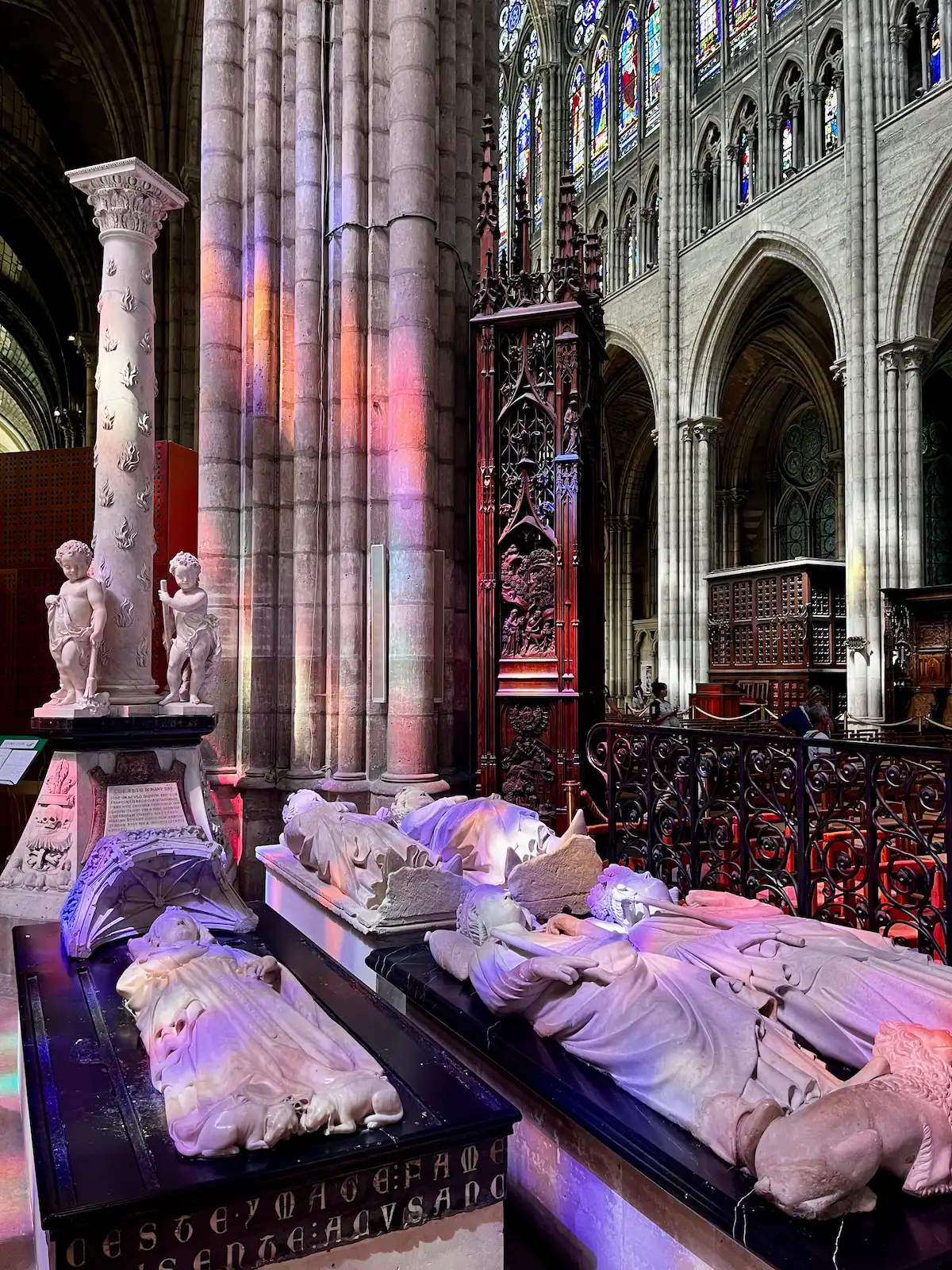
The royal tombs. Seventy effigies of the kings and queens of France, from the recumbent stone figures of the medieval monarchs to the Renaissance portrait effigies of the later Valois. In 1793 the tombs were desecrated and the bones thrown into a common grave, a chapter the tour does not pass over, and the remains were eventually returned to the crypt, in lead coffins, by Louis XVIII after the Restoration in 1817.
The birthplace of Gothic. The choir built by Abbot Suger and consecrated in 1144 was the first space to bring together every element that defines Gothic architecture, pointed arches, ribbed vaults, flying buttresses, and walls opened to coloured light. Standing in it is standing at the moment a new architecture began.
The spire rising again. The tower lost in the nineteenth century is being rebuilt in front of you, with the same stone, the same tools and the same techniques as the first time. The masons' workshop is included in your ticket, closed on Mondays, and it is a rare chance to see how a Gothic building was actually made rather than only how it looks when finished.
The royal tombs · the birth of Gothic · the desecration of 1793 · the spire being rebuilt
Pépin's advice
Give it a full morning. Saint-Denis is not a quick visit. The tombs alone require time, and the building itself rewards careful attention. Allow two hours.
Mind the day of the week. Saint-Denis is still a working church: on Sundays the monument only opens once mass is over, from midday, so a Sunday morning is not an option. And on Mondays the stonemasons' workshop on the square is closed, so the spire site cannot be seen. We take both into account when we plan the day.
Combine it with a walk through the town. Saint-Denis is one of the most diverse towns in France, and the market on Tuesday and Friday mornings is worth the detour.
Good to know
The basilica sits just north of the city and is reached in about thirty minutes by metro, five minutes on foot from the station. We confirm the meeting point and the plan for the day with you in advance, and a private guide can adapt the route on the spot if a service or event affects access.