Montmartre sits above Paris on a hill, and for the decades either side of 1900 it sat above the rest of the art world too. Renoir painted the dancers of the Moulin de la Galette a few streets from here, Van Gogh spent two years trying to understand his colors and his place in the world, and a twenty-three-year-old Picasso moved here to paint the picture that rewrote all the rules.
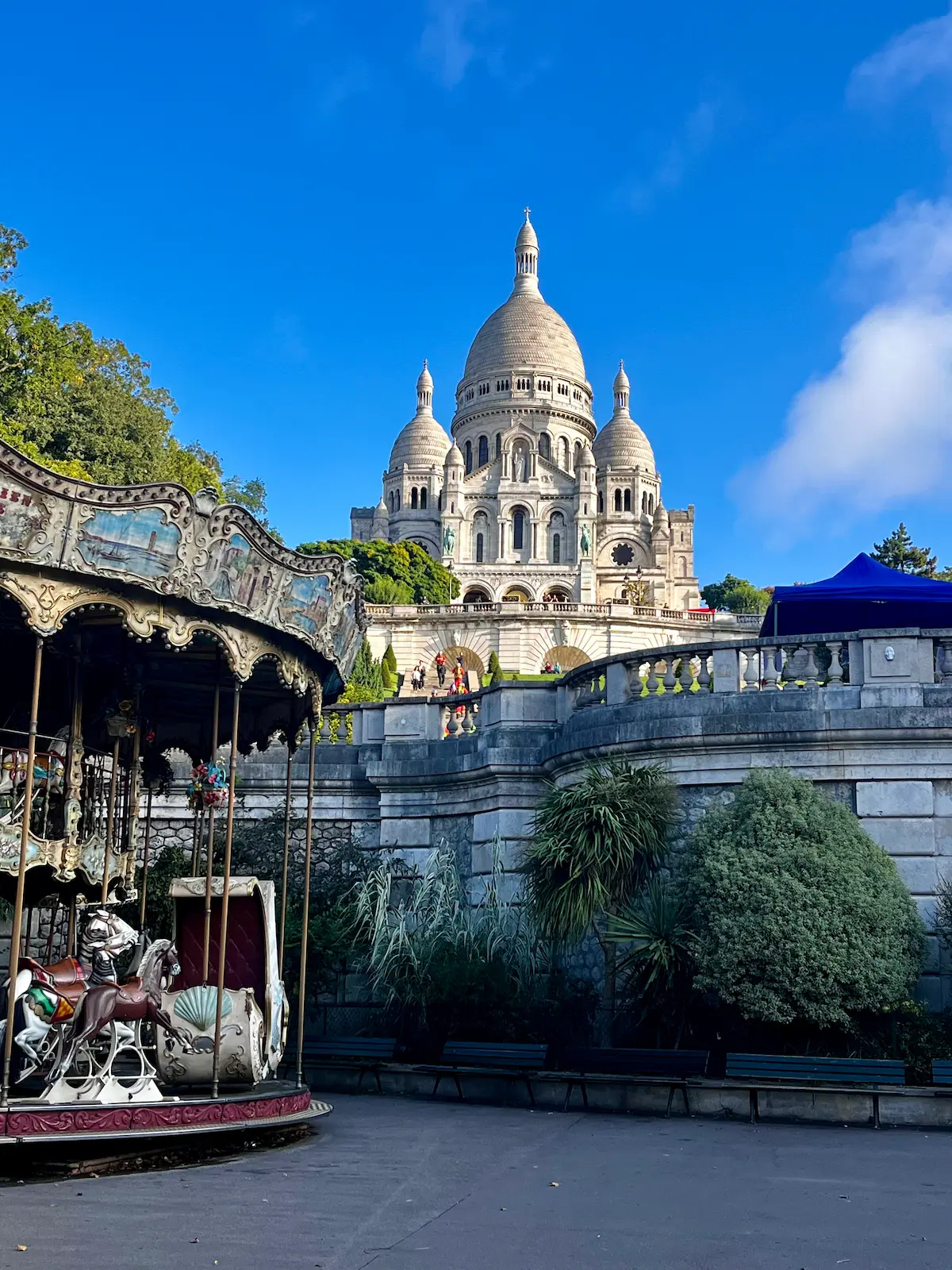
And above all of it stands the Sacré-Cœur, white against the sky, the emblem of Montmartre and one of the most recognisable silhouettes in Paris. You can see it from half the city, and from its steps you can see half the city back.
What you will see
We walk the village they lived in, one that held out against Paris until 1860 and in places still behaves like one, then the basilica above it and the cafés where all of that met at the same tables. It is a walking tour, at the pace of a conversation.
We take our time on the Butte and on the Sacré-Cœur. We read the basilica for what it actually says: why it was built, in penance after the Commune of 1871 and on the very hill where the insurrection had begun, what a church of this kind is for, and why it still divides Parisians today. It is one of the rare places in the city where the religious story and the political one are the same story. It remains a working place of worship, so most of the explaining happens outside on the steps, and inside the visit is a quieter one.
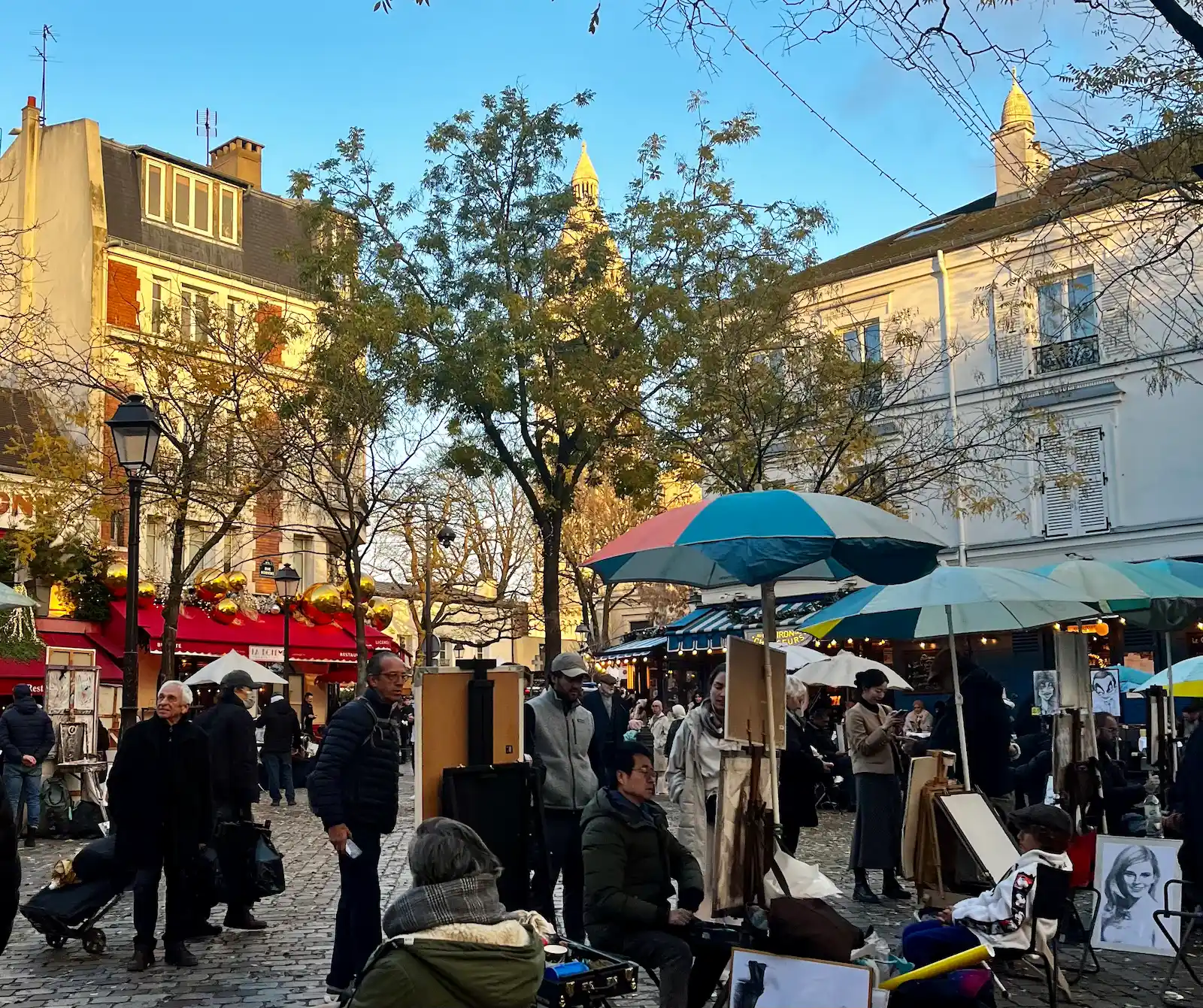
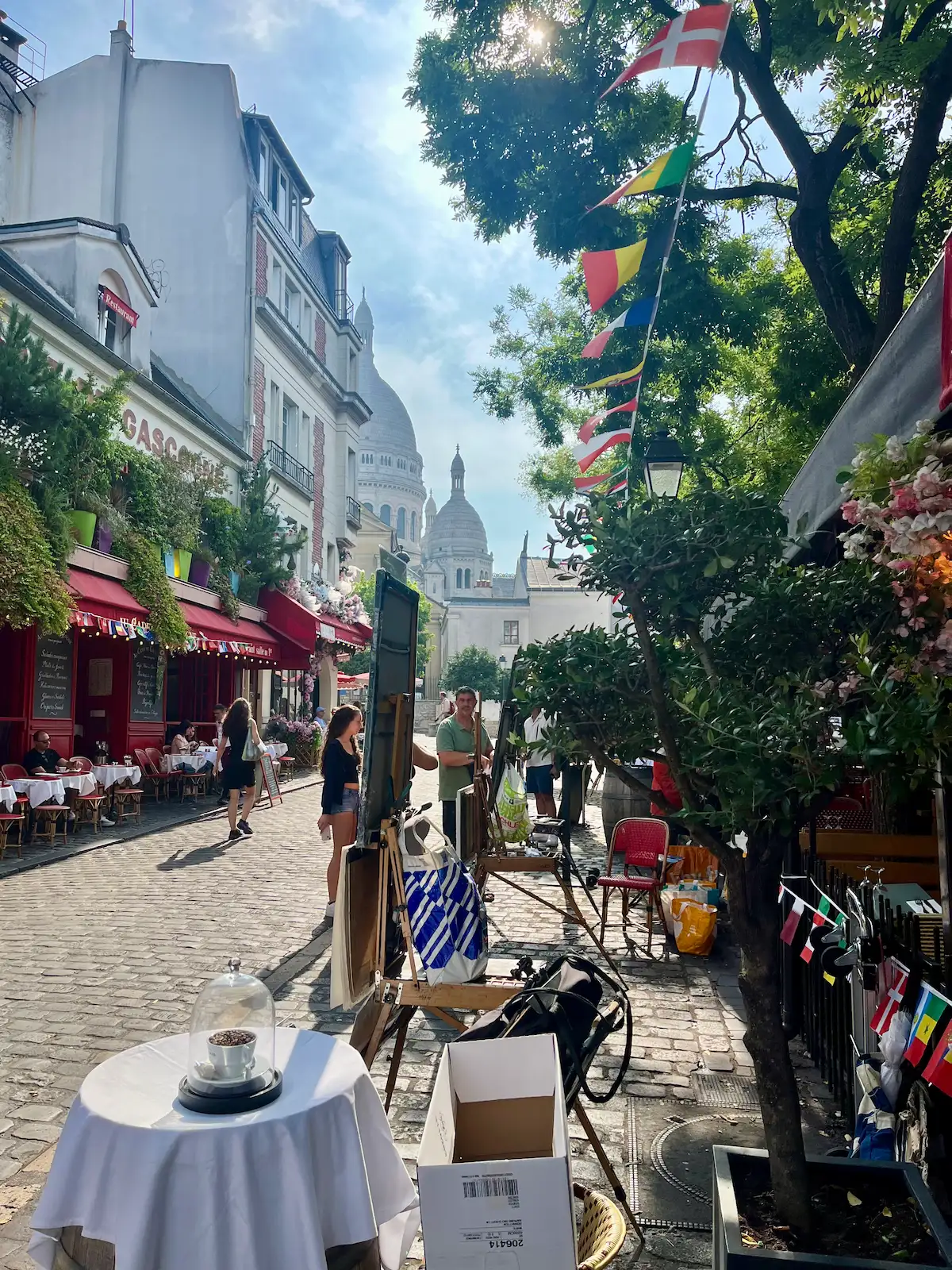
Around it, the village and its icons: the Place du Tertre, the Moulin de la Galette, the last vineyard in Paris, the stairways and quiet lanes, the streets around the Abbesses where people still live rather than visit, and the cafés that have been serving the same corner for a century.
And the artists, which is why any of it exists. The international names the whole world knows, Picasso and Le Bateau-Lavoir where he painted Les Demoiselles d'Avignon, Van Gogh, Modigliani, and the French ones still loved here today, Renoir, Utrillo, Suzanne Valadon, Toulouse-Lautrec, along with the writers and singers who made Montmartre their own.
The village · the painters' streets · the Sacré-Cœur
Pépin's advice
Wear shoes you can walk in. The Butte is steep and the cobblestones are uneven. This is not the place for heels or new shoes. Unfortunately, between the gradient, the stairways and the cobblestones, this is not a tour we can make wheelchair accessible.
Add the Musée de Montmartre. It occupies the oldest house on the hill, where Renoir, Utrillo and Suzanne Valadon all had studios, and its gardens look down over the vineyard from the quietest terrace in the quarter. It is small, rarely crowded, and it makes a good arty addition. Tell us and we will build it into the route.
The climb is optional. The funicular runs alongside the great staircase and takes a few minutes to reach the top of the hill. Tell us on the day, or in advance if you would rather not think about it, and we simply build the route the other way round. Nobody has ever seen less of Montmartre for having arrived at the top rested.
You can go higher still. The dome of the Sacré-Cœur is open to visitors, 292 steps up a narrow spiral staircase, for a small extra fee paid on site. The view from the top is the widest in Paris after the Eiffel Tower. If the urge takes you on the day, tell us and we will make room for it.
Good to know
This is an outdoor walk on a steep hill, with cobblestones in places and few opportunities to sit along the way, so comfortable shoes make all the difference. Any museum you choose to add keeps its own opening days. We will confirm the route and the meeting point with you before the day.