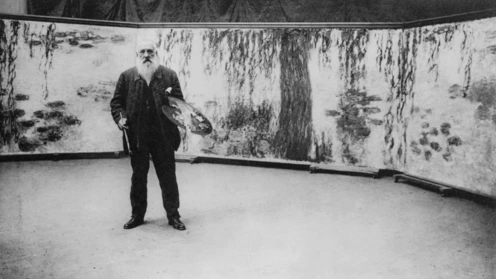
On 12 November 1918, the day after the armistice, Claude Monet gave the Nation his first two great panels as a symbol of peace. The Nymphéas were installed at the Orangerie in 1927, to his own plans, a few months after his death. From the late 1890s until he died in 1926 he had devoted himself almost entirely to this cycle, and here it is crowned: works conceived specifically for the building, hung in two elliptical rooms he designed himself, the surface running unbroken from one panel to the next.
The surrealist painter André Masson called the rooms the “Sistine Chapel of Impressionism” in 1952. They are the last Monet conceived as a complete environment rather than a set of pictures, and one of the largest monumental works of painting of the first half of the twentieth century. The rest of the museum, which holds one of the finest collections of modern painting in Europe, is often half empty. This tour covers both.
What you will see
The Nymphéas. Eight panels across two oval rooms, and the story of how they came to be here: the gift of 1918, the years of negotiation, the building reshaped to Monet's own plans, the opening he did not live to see. He wanted to give the viewer, in his own words, “the illusion of an endless whole, of water without horizon and without shore”. We look at how the rooms produce that effect, at what the daylight does to the surfaces through the day, and at what he was attempting in his last decade, when his sight was failing and the painting was growing looser and larger.
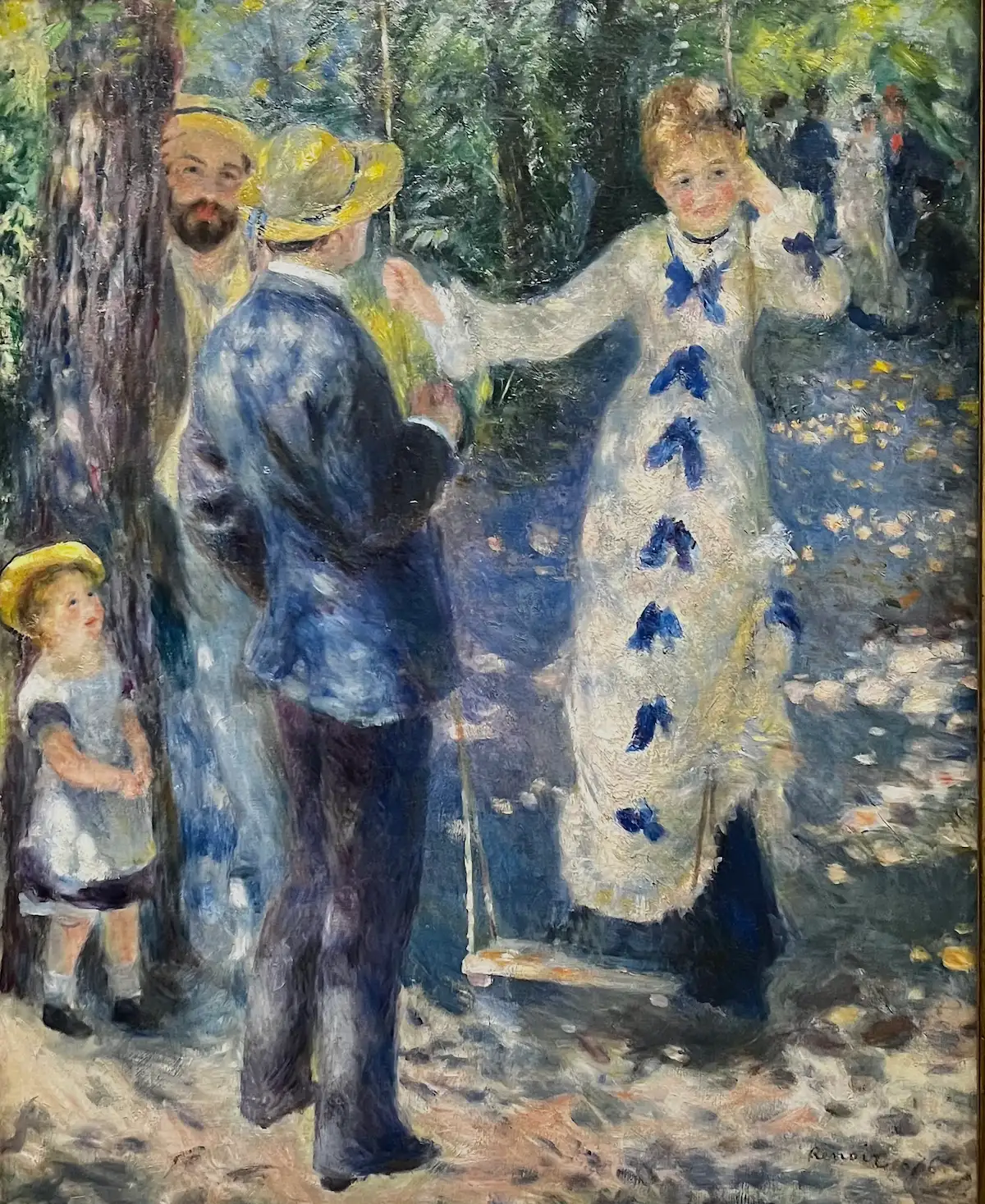
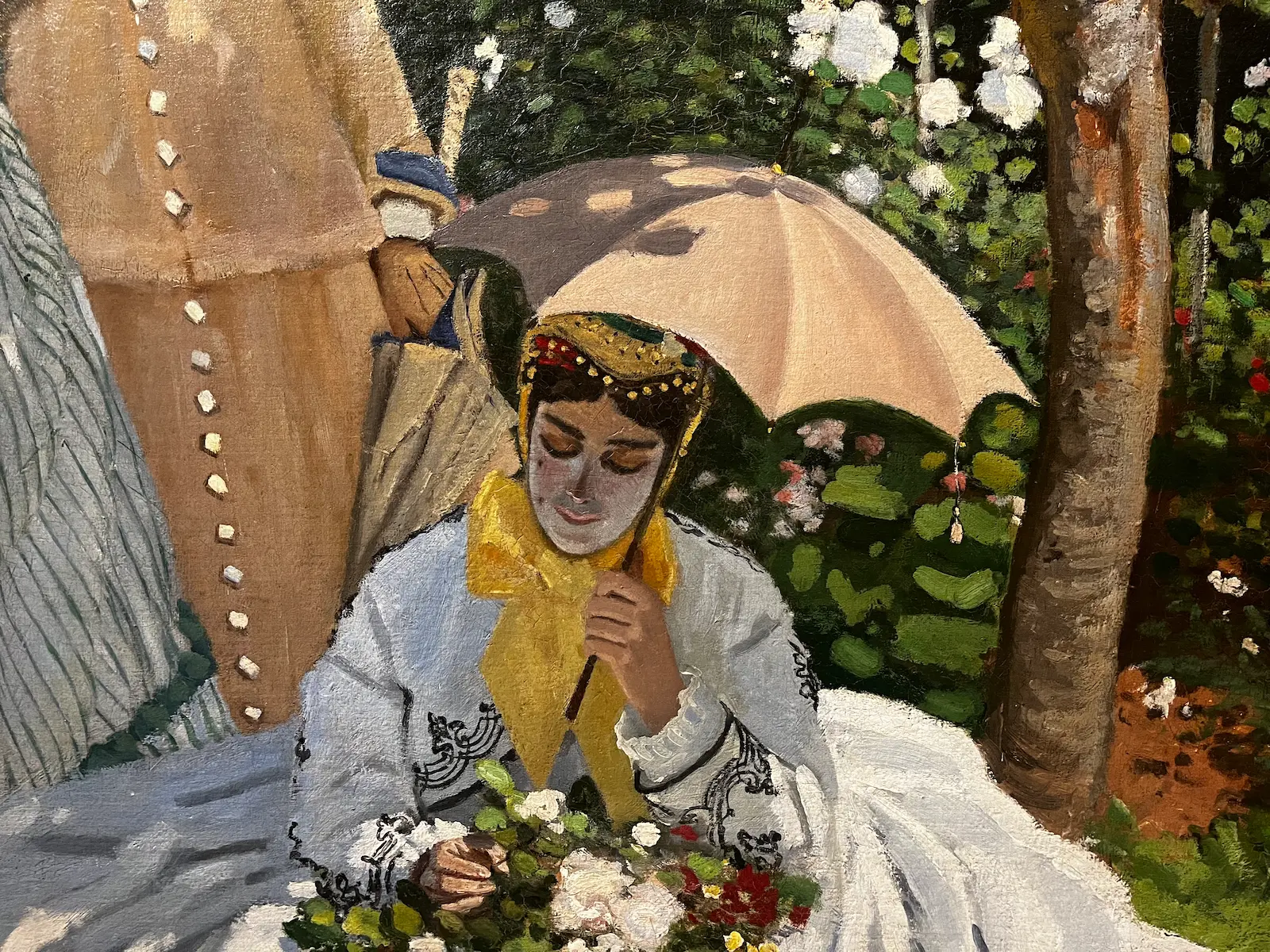
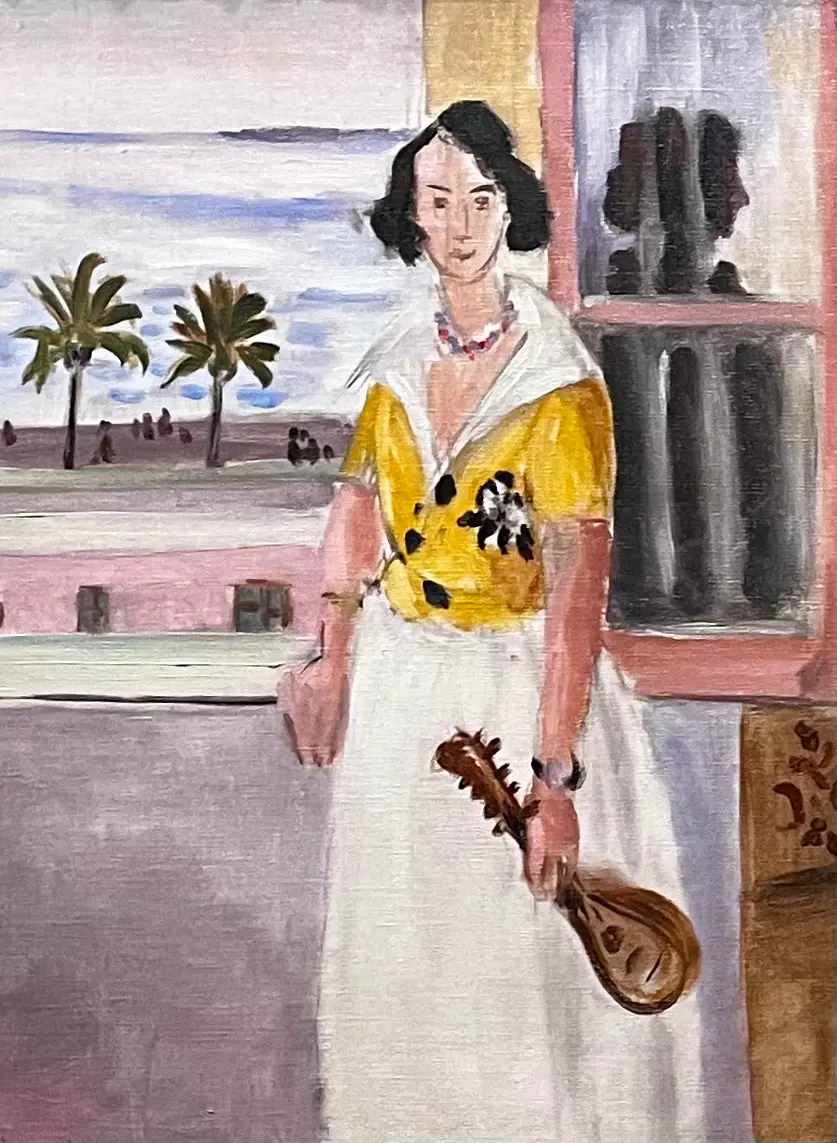
The Walter-Guillaume collection. Downstairs, 148 paintings from the 1860s to the 1930s, gathered by Paul Guillaume, a young dealer who knew the artists personally and who died in 1934, at forty-two, still planning a museum of his own. His widow Domenica remarried, sold off part of the collection, and attached both her husbands' names to it when the French state bought it in the late 1950s. Her own story is a shady one, trailed by a court case and by rumours about how those two men died, none of it ever proven.
It is why one museum holds twenty-five Renoirs and fifteen Cézannes alongside thirty-one Derains, twenty-two Soutines, twelve Picassos, ten Matisses, ten Utrillos, nine Rousseaus, seven Laurencins and five Modiglianis, in rooms that are almost always uncrowded, where the relationships between the painters matter as much as any single canvas. It contains works that would be the centrepiece of any other museum.
The Nymphéas · the Walter-Guillaume collection
Pépin's advice
Book well in advance. The museum caps the number of visitors, and slots are often gone several days ahead. A ticket guarantees entry at a fixed time, so the earlier we can secure it, the more freedom you have over the day.
If there is a temporary exhibition, it is included. The Orangerie stages one or two a year, and the ticket covers it. We leave it for the end, so you can walk through it on your own once the guided visit is over, at whatever pace you like.
Combine with the Musée d'Orsay. The two museums are fifteen minutes apart on foot, on either side of the Tuileries. A morning at the Orangerie and an afternoon at the Orsay is a complete account of French painting from 1870 to 1940.
Good to know
The museum closes on Tuesdays. It sits at the western end of the Tuileries Gardens, in the corner of the Place de la Concorde, and we meet at the entrance on the garden side, a few minutes from Concorde or Tuileries on line 1. Works other than the Nymphéas are occasionally moved for restoration or loan, so if something described here is away on the day, our guide will reshape the visit around what is on the walls.