A first day in Paris is usually spent working out where things are. This one is spent understanding them. We take the sites everyone comes for, the hill, a great museum, the island where the city began, the tower that was never meant to stay, and we put them in an order that turns a checklist into a story. By the evening the map in your head has a shape, and the rest of your stay has somewhere to grow from.
It is a full day, and it moves. Not a sprint through everything Paris contains, but a considered first pass across the things that explain the others. Everything is private, everything is arranged, and the day is shaped around what you actually want to see. We cross the city by metro, tickets included, and you will know how to use it by the evening.
What you will see
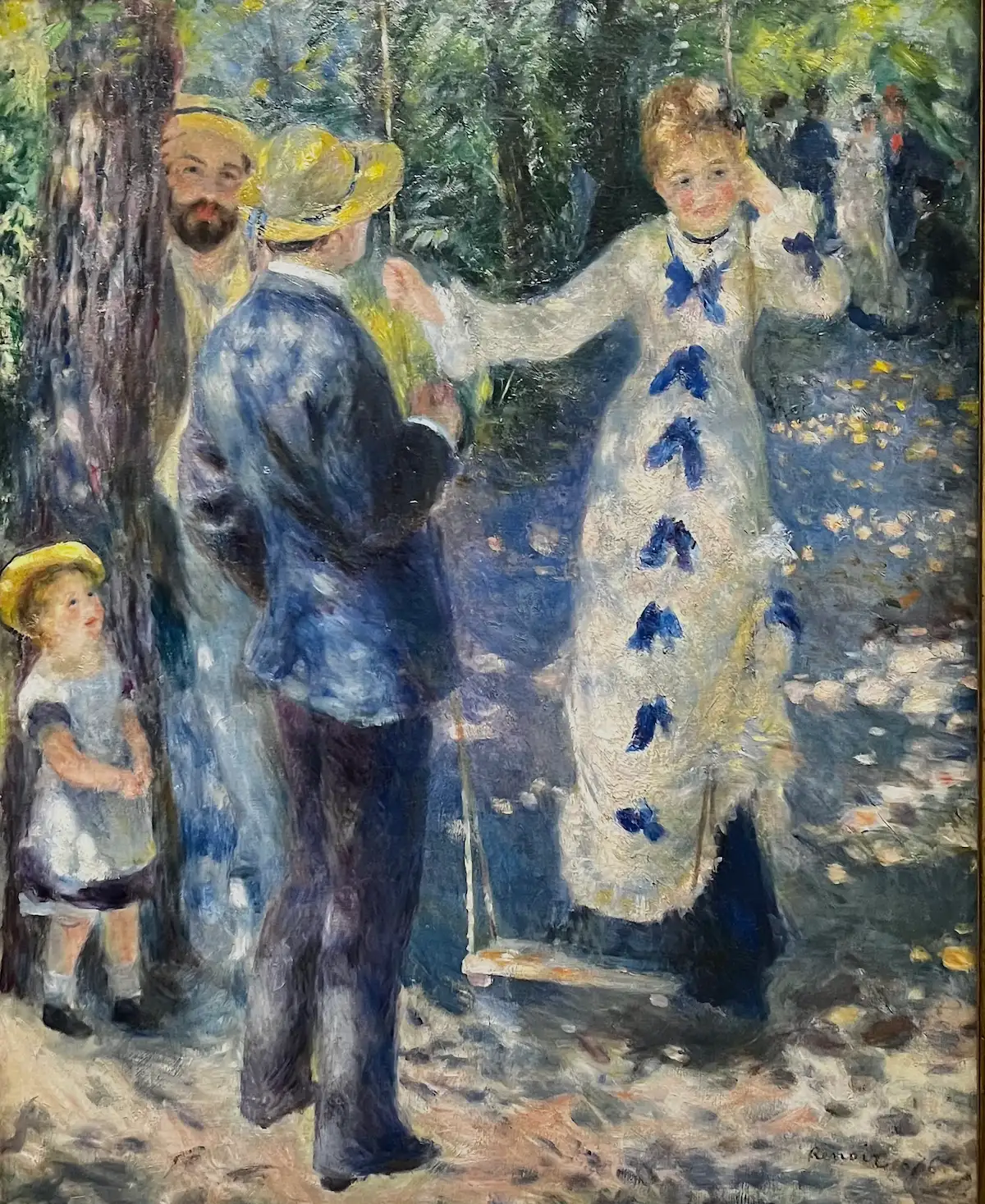
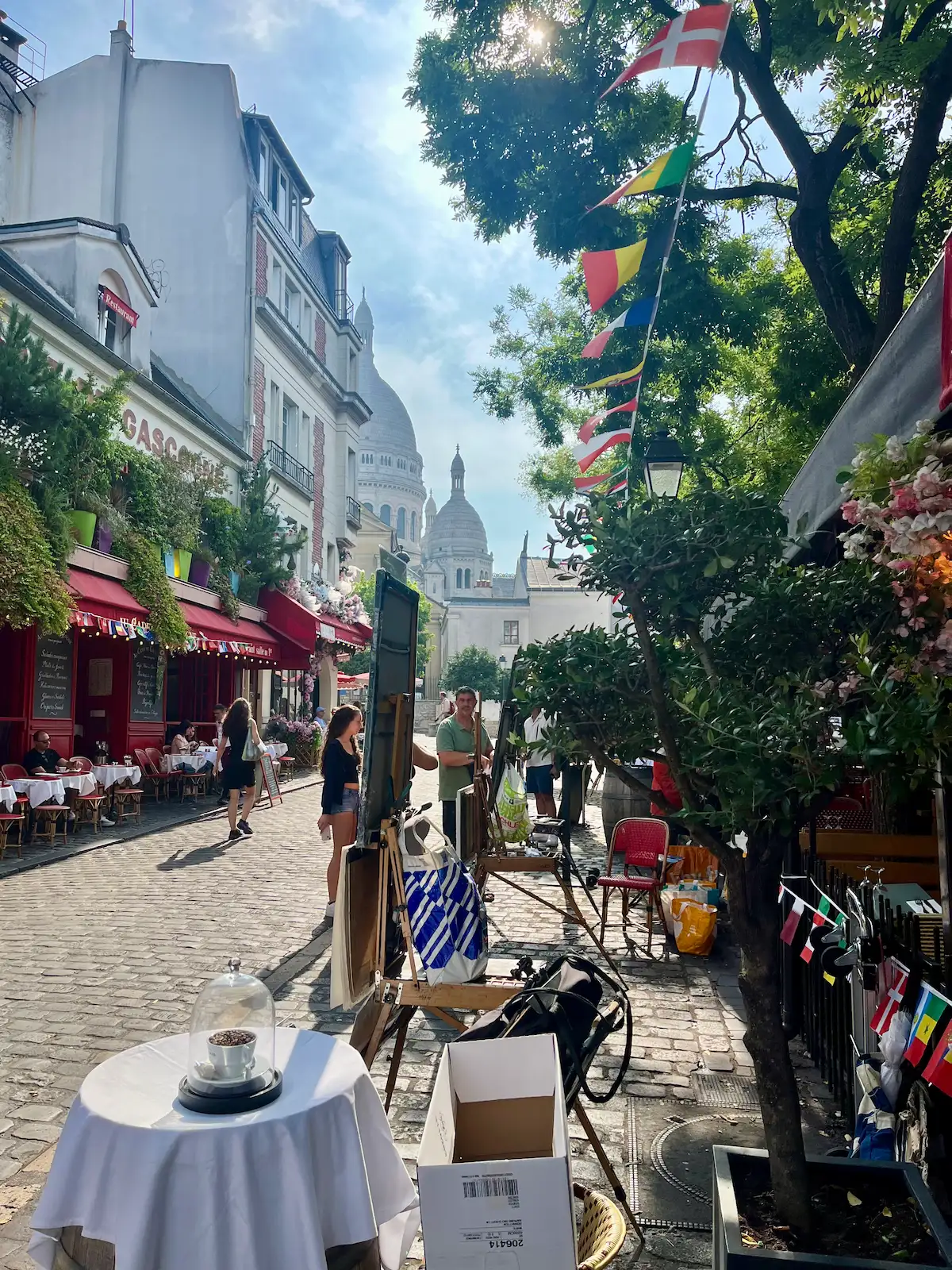
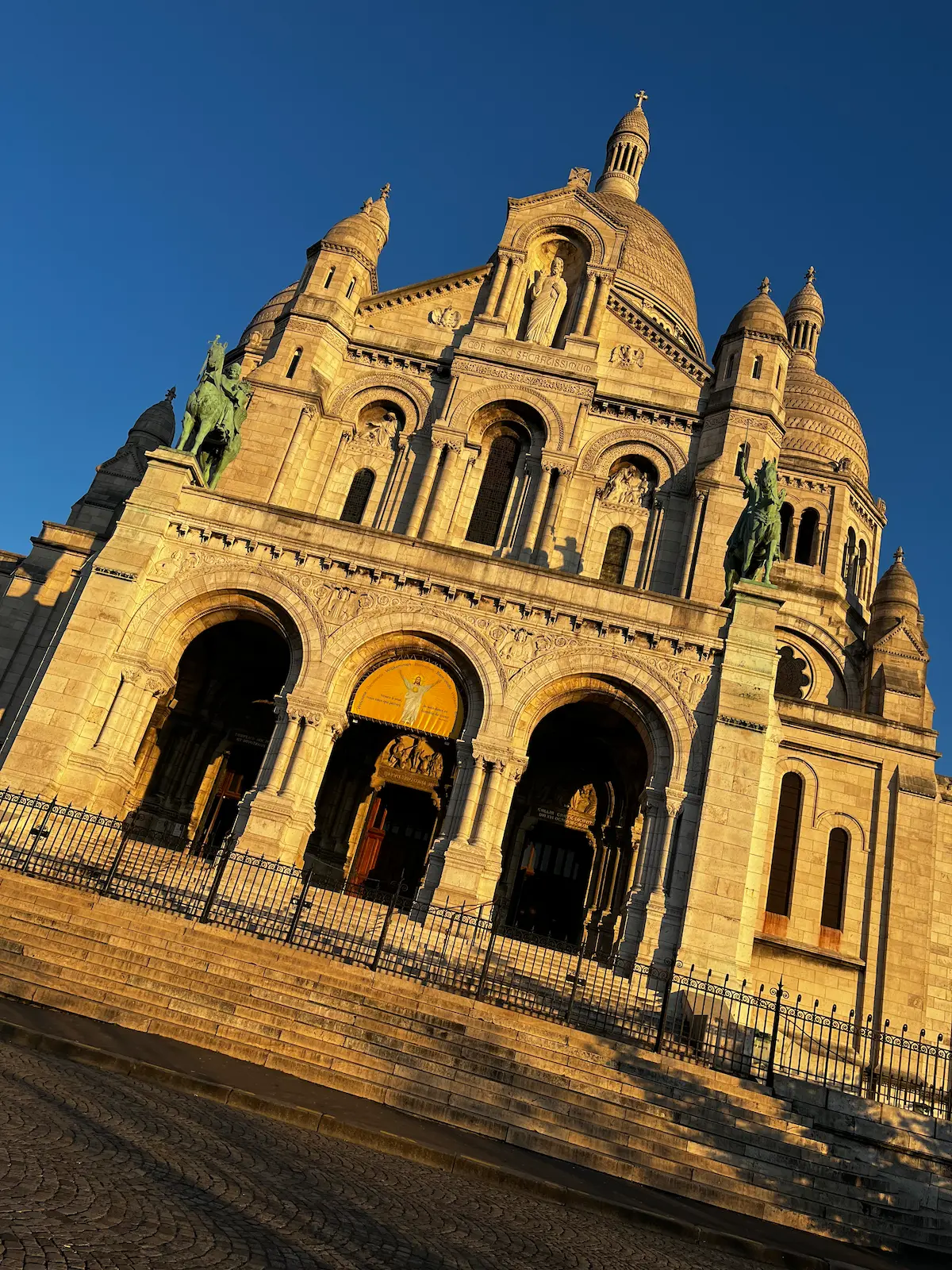
Montmartre. The village that stayed outside Paris until 1860, the studios where Picasso, Renoir and Van Gogh worked for very little money, the vineyard still growing on the north slope, and the view that puts the whole city in front of you at once. The hill is at its best when the light is low and the streets are quiet, and from up here you can point at everything else the day contains.
The Louvre or the Musée d'Orsay, as you prefer. One great museum, chosen by taste rather than obligation. At the Louvre it is the highlights visit, the three ladies above all, the Mona Lisa, the Venus de Milo and the Nike of Samothrace, with a handful of other works that carry the story between them. At Orsay it is the nineteenth century, Monet, Degas, Van Gogh and Cézanne, in a railway station turned museum. Entry is arranged in advance either way. Tell us which, or tell us what you love and we will tell you which.
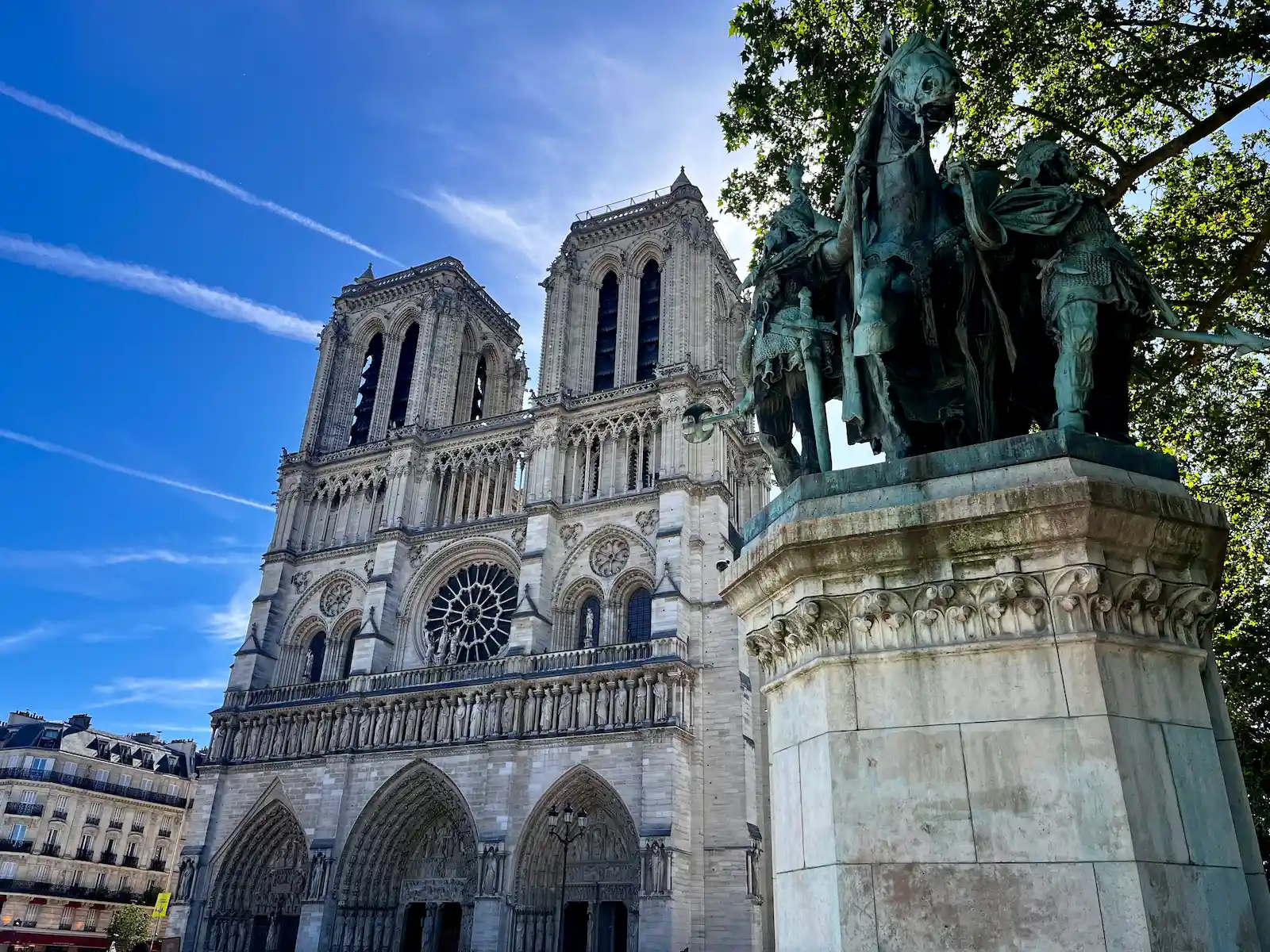
The Île de la Cité and Notre-Dame. The island where Paris began, and where the cathedral has stood for eight centuries. The west façade read portal by portal, the flying buttresses of the apse, the fire and the reconstruction. Interior access now depends on tickets that need to be booked months in advance, so on this first day, the visit is usually built around the exterior and the island, which leaves you able to step inside on your own afterwards, knowing exactly what you are looking at and when to come back.
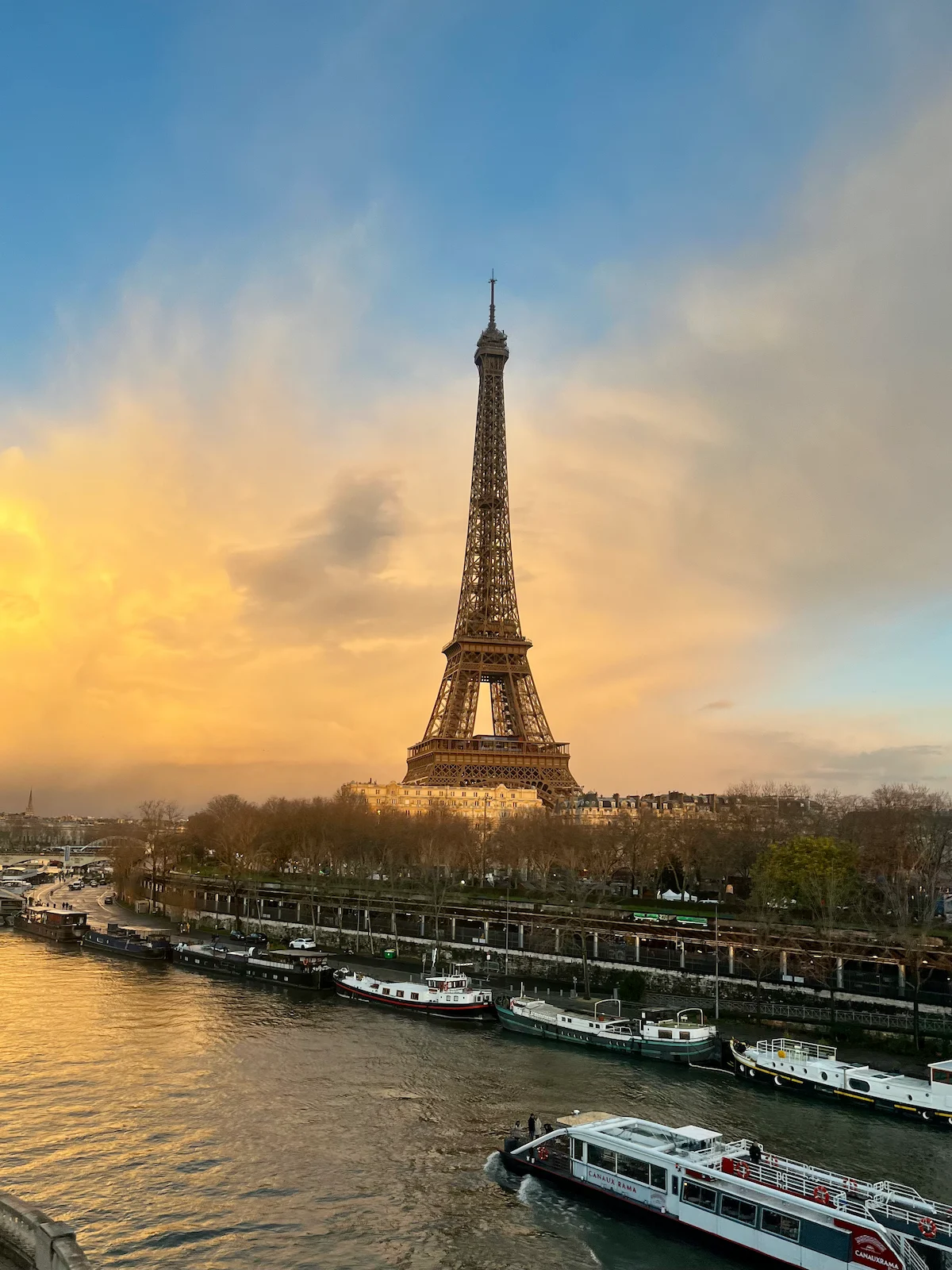
The Eiffel Tower. Built in twenty-six months, meant to be pulled down after twenty years, saved by a radio antenna. The engineering story most visitors never hear, told at the foot of the thing itself.
The metro, learned together. We move between the sites the way Parisians do, and we take the time to teach it properly: reading the map, buying and validating a ticket, changing lines in a large interchange. It is the part of the day you keep using long after we have said goodbye, on your own, for the rest of your stay. Tickets and travel passes for everyone in the group are included in the price we quote you, so there is nothing to buy or work out on the day.
The order is yours. Nothing here is fixed. We shape the sequence around the day of the week, the opening hours, the weather and how you like to move, and we will tell you honestly which order works best once we know your dates. The one thing worth deciding early is where you would like the day to end, because each ending opens something different. Finish on the Île de la Cité and you can step into the cathedral on your own afterwards, or take a boat from the quays below. Finish at the Eiffel Tower and you can go up to the top if you wish, or join a cruise from the Pont d'Iéna. Finish at the museum and you are left in the centre of Paris, on the river, with the evening in front of you.
Montmartre ·Louvre·Métro·Notre-Dame·Eiffel Tower
Pépin's advice
Do it on day one. This day works hardest when it comes first. Everything you see afterwards, on your own or with us, lands against a background that is already in place.
Say what you love, not what you think you should see. The museum is the one real choice of the day, and it should be made on appetite. Painting after 1850 points to Orsay. Antiquity, sculpture and the long story of civilisations point to the Louvre. There is no wrong answer, and the day works either way. It is also possible to switch to another neighbourhood if you already planned to visit Montmartre on your own later.
Any day of the week works. The Louvre closes on Tuesdays and Orsay on Mondays, which is precisely why the museum is a choice. Whichever day you land on, one of the two is open, and the day is built around it.
Lunch is part of the day. We make a proper stop and recommend a selection of places we genuinely like, rather than simply choosing somewhere convenient nearby. The break is built into the itinerary, giving you time to enjoy lunch at your own pace before continuing the tour.
Change it. Sainte-Chapelle sits five minutes from Notre-Dame and is one of the most extraordinary interiors in Europe. The Marais can replace Montmartre if a neighbourhood on the flat suits you better. Tell us what you would like and we will rebuild the day around it, or start from a blank page in the day builder.