Notre-Dame reopened in December 2024, five years after the fire. Over a billion euros spent, two thousand craftspeople involved, a building taken apart and put back together with a precision that will be studied for decades. To visit it now is to see something genuinely new, and to ask what it means to restore a building that was already eight centuries old.
The cathedral is also one of the finest examples of Gothic architecture in the world. Flying buttresses, pointed arches, ribbed vaults, all of it invented or perfected here, on this island, in the twelfth and thirteenth centuries. The nave is thirty-five metres high. The three rose windows hold glass that survived the fire. The treasury holds objects carried out of the building by hand on the night of 15 April 2019.
What you will see
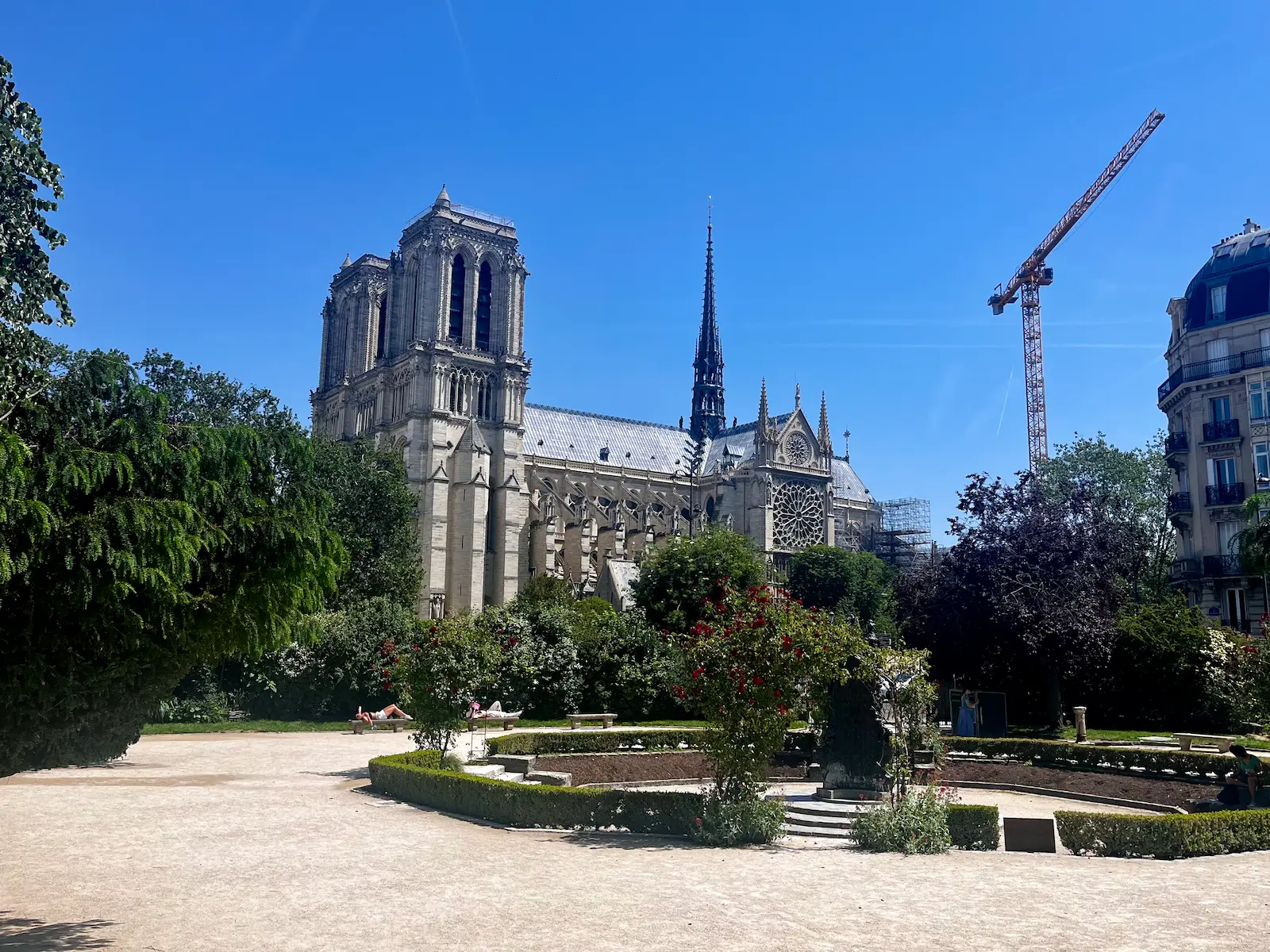
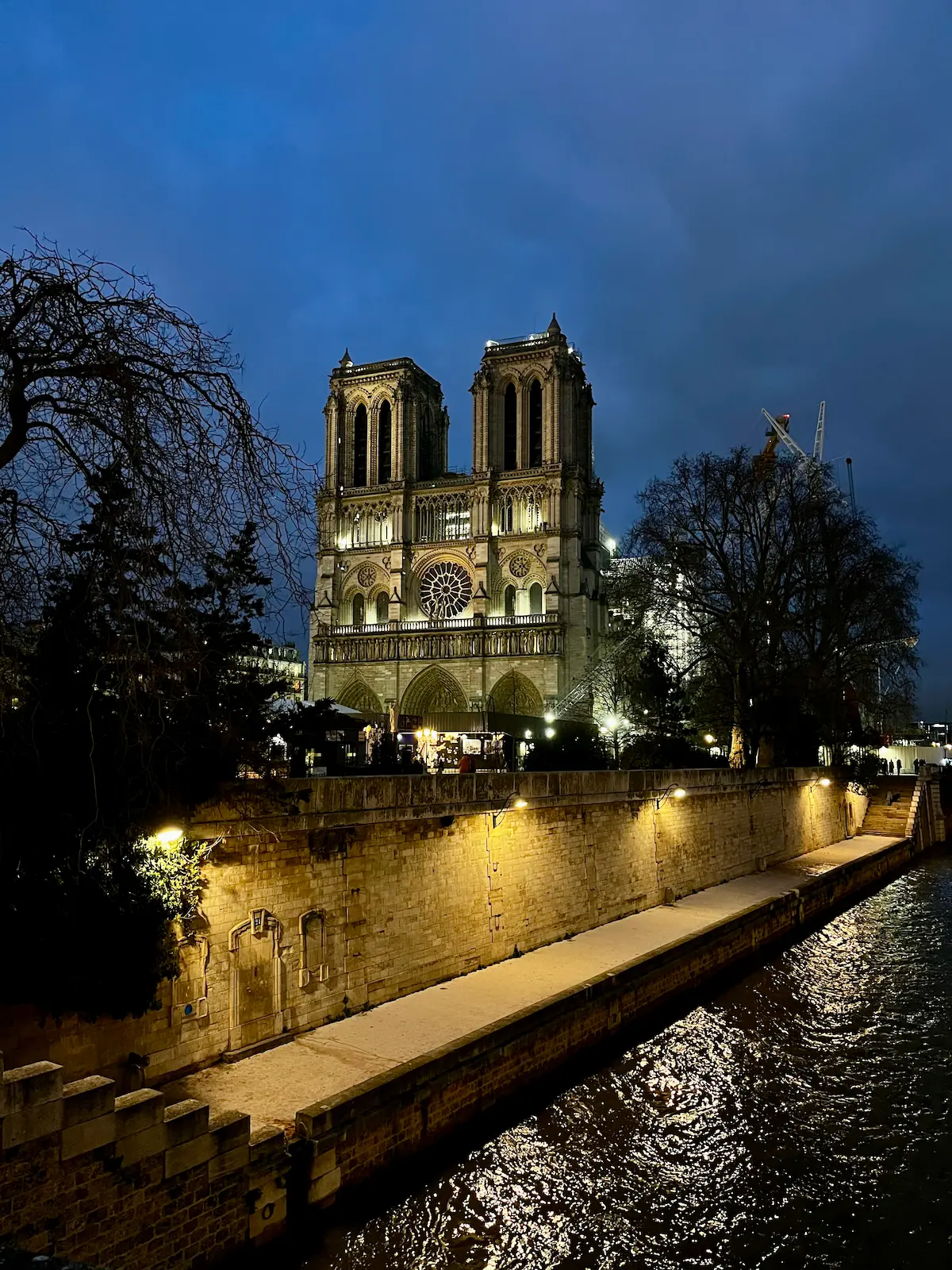
The building from outside. The west façade is a book, and it can be read. The three portals, the gallery of kings, the rose above them, then round to the apse where the flying buttresses do the work that lets the walls become windows. This is where the visit begins, and where the whole logic of Gothic architecture becomes visible. It is also the part of the cathedral that no ticket is needed for.
The island around it. Notre-Dame did not appear on an empty site. The Île de la Cité is where Paris began, and the ground the cathedral stands on has carried a Roman town, a medieval quarter swept away in the nineteenth century, and the royal palace next door. Walking the island explains why the cathedral is where it is, and what was cleared to give it the square it now faces.
The fire and what came after. What burned, what was saved, what was rebuilt as it had been and what was quietly rebuilt differently. Five years, two thousand craftspeople, a new spire, and a long public argument about how we treat the buildings we inherit. It is the most recent chapter of the cathedral's history, and one of the most revealing.
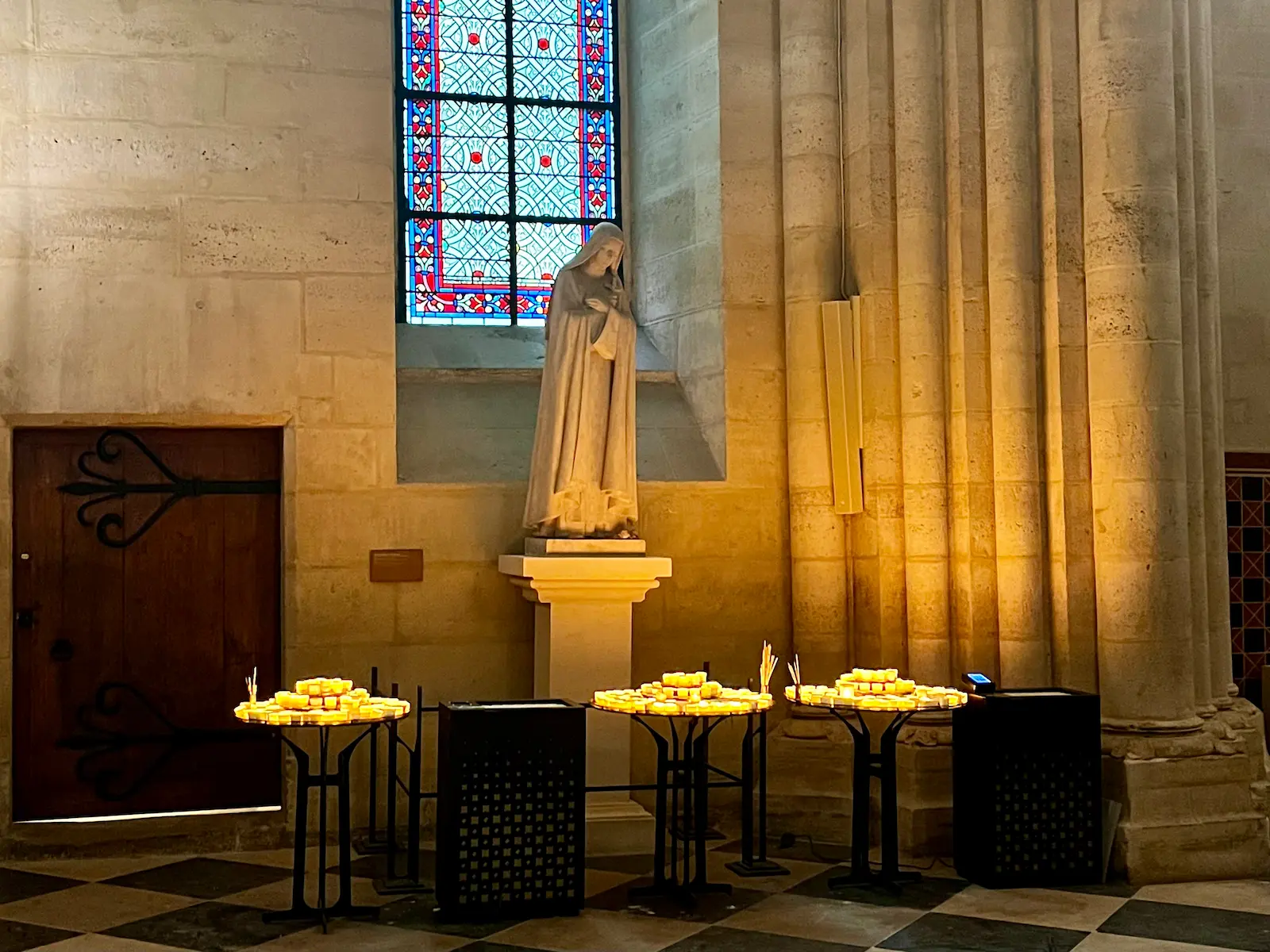
The interior, when a ticket can be secured. The nave, the three rose windows, each from a different century, the choir, and the treasury. The north rose, the oldest, came through the fire intact.
The Gothic façade · the Île de la Cité · the fire and the reconstruction
Pépin's advice
Plan early, and plan for both outcomes. If the interior matters to you, get in touch four to six months before your stay so we can try for a slot. Tell us at the same time what you would like to do if no ticket comes through, and we will have the alternative ready rather than improvised.
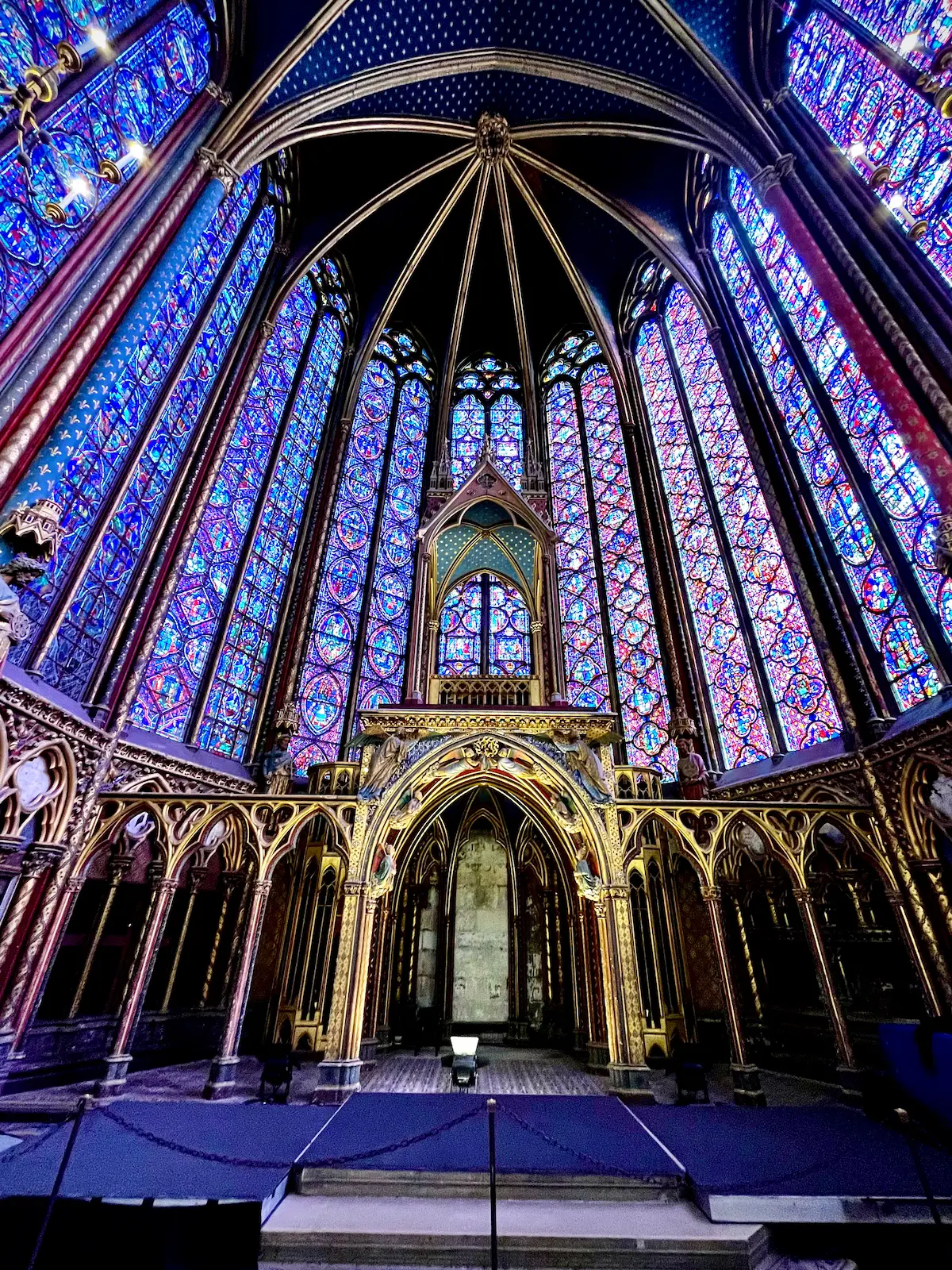
Make a pair of it. Sainte-Chapelle was built to house the Crown of Thorns, the same relic carried out of Notre-Dame on the night of the fire, and it stands five minutes away. Together the two form a single argument about Gothic Paris and what it believed about itself. The day builder puts the morning together in one go.
No knowledge of the Bible required. Notre-Dame is a cathedral, and the visit is open to everyone regardless of faith or background. The building is architecture, history and craft as much as it is religion, and the story of the reconstruction belongs to all of it equally.
Dress for a place of worship. Notre-Dame is an active church and the guidelines ask for modest dress, shoulders and knees covered, hats removed for men indoors. The cathedral's own wording is worth reading: full guidelines on their website →